Healthcare: Improving Access & Reliability Through Technological Advancement
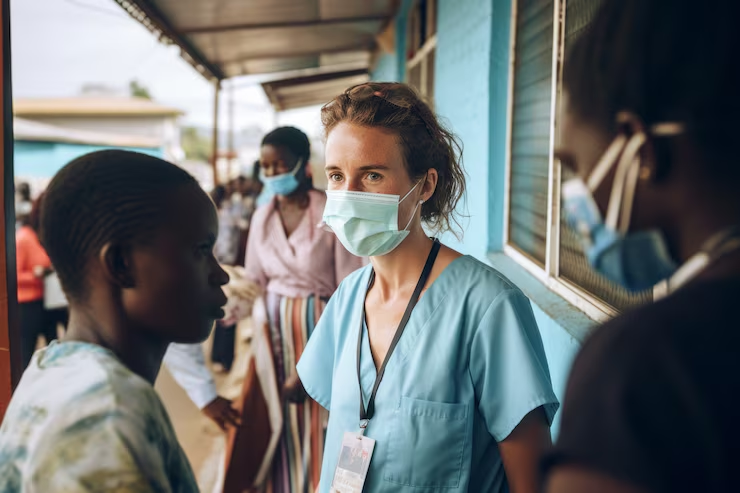
SZM’s healthcare work is guided by a simple principle: every community, regardless of location or resource constraints, deserves access to reliable, high-quality medical care. A critical challenge in underserved regions is the inefficiency of traditional healthcare systems—delays in diagnosis, shortages of medical supplies, and limited access to specialized care often lead to preventable deaths. To address this, SZM leverages technological innovation to streamline service delivery. In rural areas of Southeast Asia, for instance, SZM has deployed “Digital Health Kits” to local clinics: these kits include portable ultrasound machines, electronic health record (EHR) systems, and telemedicine tools, all powered by low-cost, energy-efficient devices. By digitizing patient records, clinics reduce administrative burdens and ensure that medical histories are accessible even if a patient moves to a new facility. Telemedicine tools also connect local doctors to specialists in urban centers, enabling timely consultations for conditions like maternal health complications and chronic diseases.
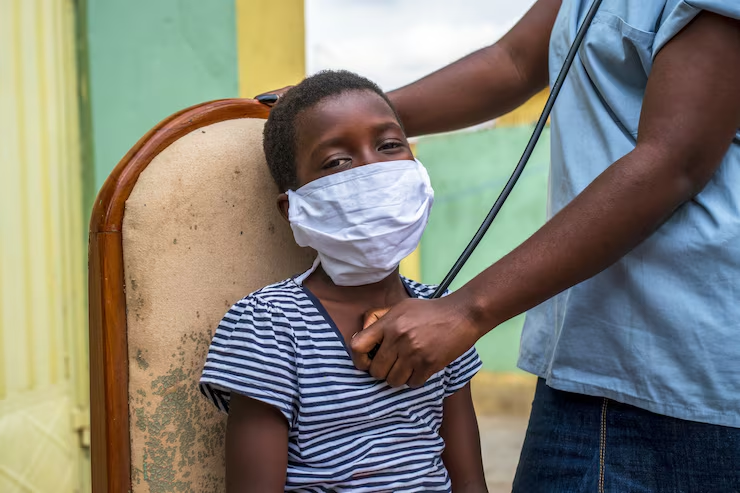
A key focus of SZM’s healthcare work is supporting vulnerable populations, including rural communities, refugees, and individuals living in extreme poverty. In Africa, SZM’s “Mobile Health Clinics” travel to remote villages that lack permanent healthcare facilities. These clinics are equipped with tech-enabled diagnostic tools, vaccines, and essential medications, and staffed by trained nurses and community health workers. The clinics also use SMS-based reminder systems to ensure patients attend follow-up appointments and adhere to treatment plans—improving outcomes for conditions like HIV/AIDS and malaria. For refugee camps, SZM has implemented biometric patient identification systems to track medical histories and vaccine records, preventing duplication of care and ensuring that resources are allocated efficiently.
To build resilient healthcare systems that can withstand crises—from pandemics to natural disasters—SZM invests in public health preparedness and capacity building. The organization works with local health ministries to develop tech-driven disease surveillance systems, which use data analytics to detect outbreaks early. During the COVID-19 pandemic, for example, SZM’s surveillance tools helped identify emerging hotspots in Latin America, enabling governments to deploy testing and vaccination resources quickly. Additionally, SZM offers training programs for healthcare workers, teaching them how to use new technologies, respond to public health emergencies, and provide culturally sensitive care. By combining technological innovation with community-centered approaches, SZM ensures that healthcare systems are not only efficient but also adaptable to future challenges.